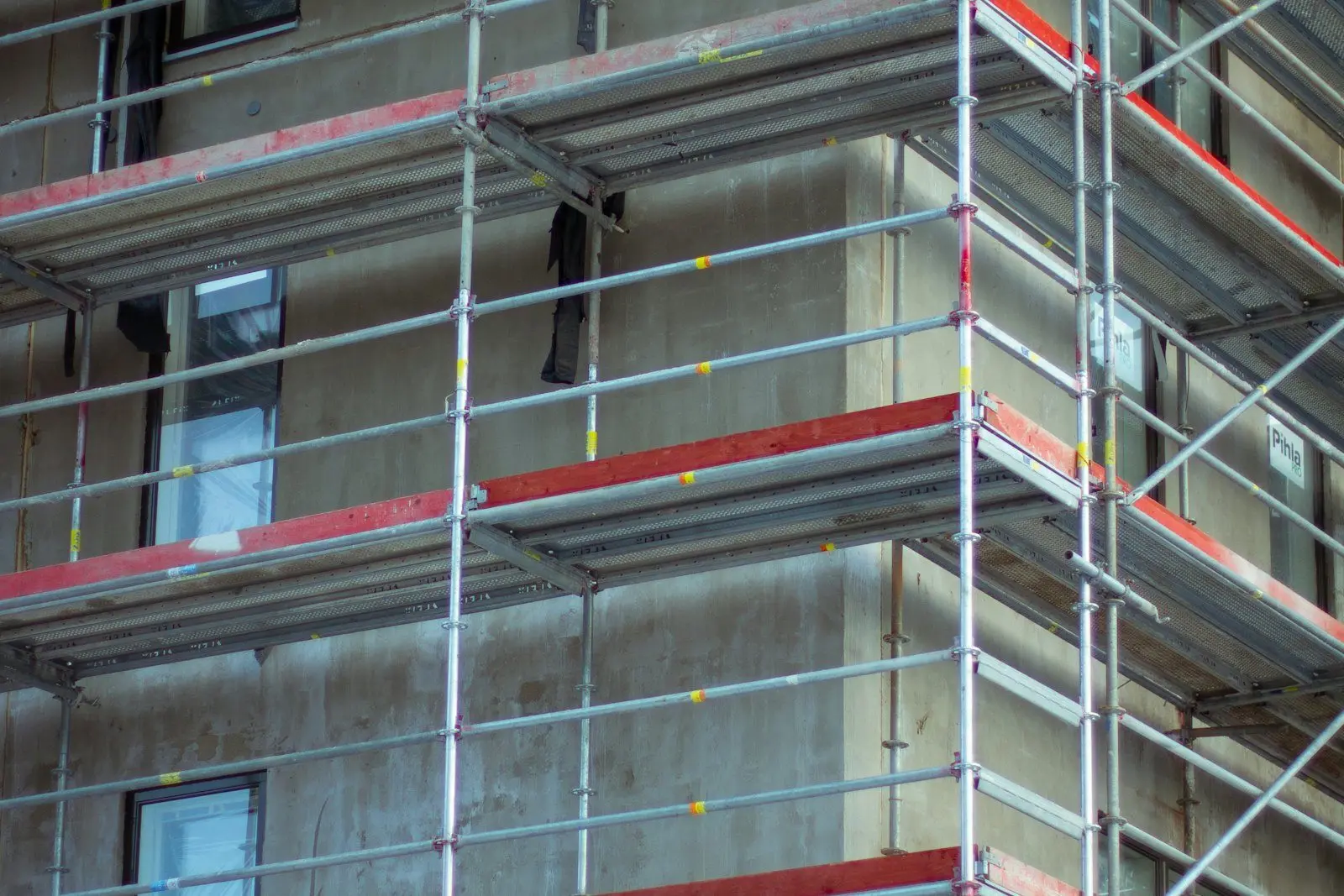
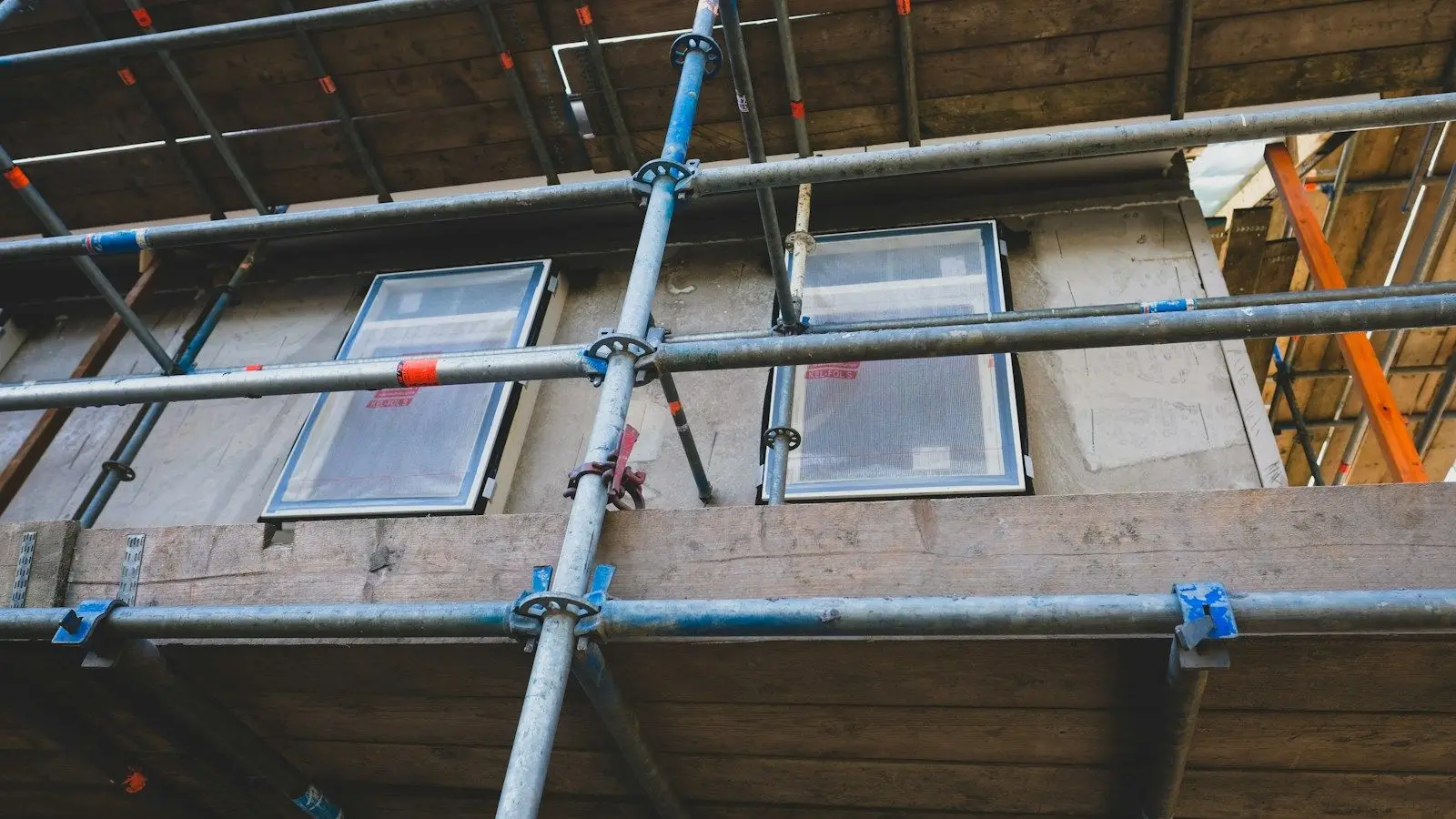
Step-by-step scaffolding dismantling
Dismantling is assembly in reverse order, but with its own hazards. We show how to dismantle scaffolding safely and prepare the components for the next construction project.
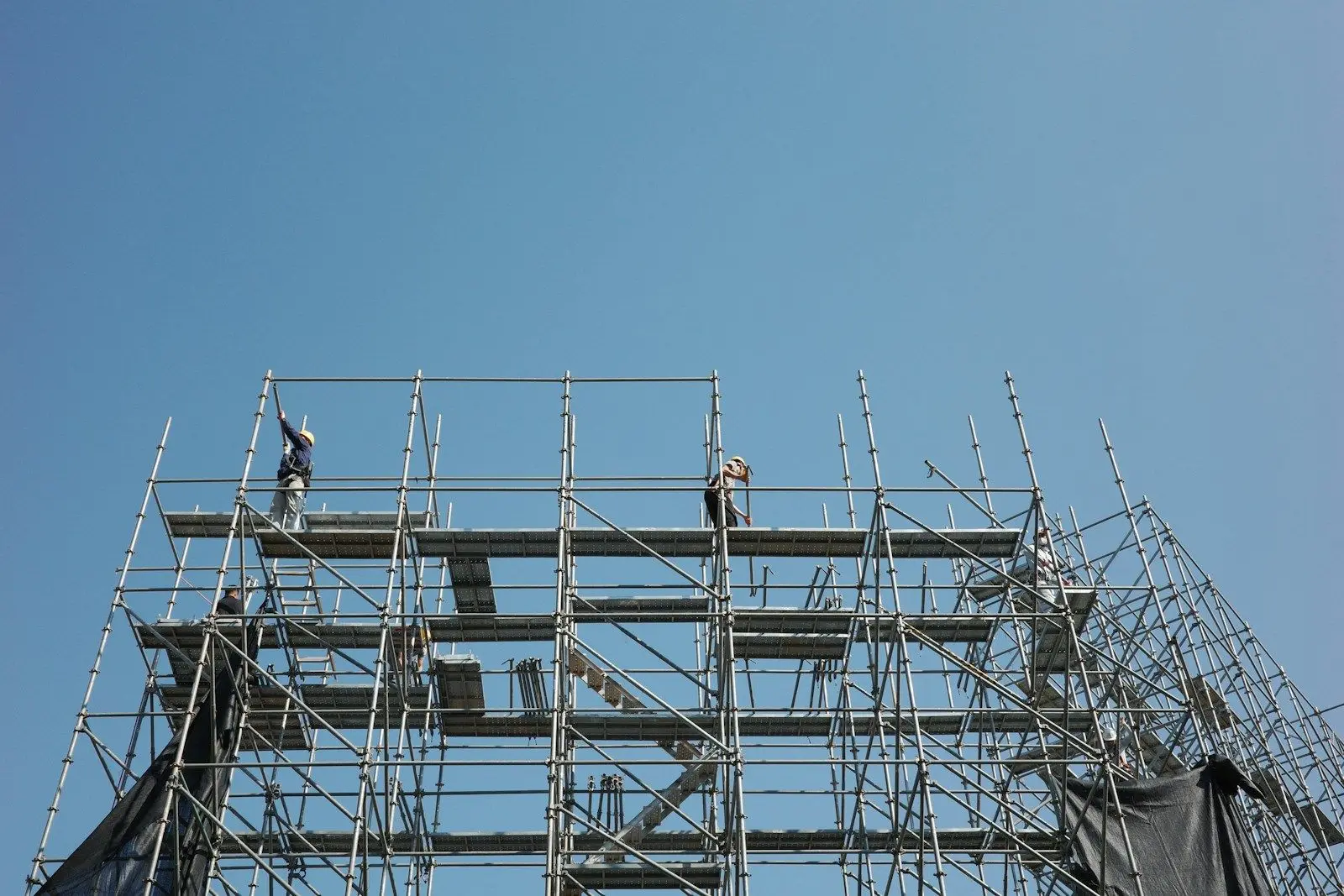
This guide shows the general dismantling sequence for Plettac-type facade scaffolding. It does not replace the system's technical and operational documentation (DTR). Dismantling, like assembly, is carried out by persons qualified as scaffolders.
Before dismantling
- Make sure that work on the facade is complete and that there are no materials, tools or rubble on the platforms.
- Mark out and cordon off the danger zone beneath the scaffolding. No unauthorised persons may be present in it.
- Check the weather forecast. Scaffolding must not be dismantled in strong wind, storms or icy conditions.
- Prepare a place for the components and a means of lowering them, for example a hoist or passing them by hand.
Step 1: from the top, level by level
Scaffolding is dismantled from the highest level downwards. First the nets and protective sheeting are removed, then the guardrails, toe boards and platforms of the top level, and finally the frames. Only once a level has been dismantled do you move down to the next one.
Step 2: anchors and braces last at each level
Anchors and braces are removed only when dismantling reaches the given level. The scaffolding must not be untied from its anchors prematurely, as the remaining part loses stability. Scaffolders use fall protection equipment at all times.
Step 3: lowering the components
Components must not be thrown down from a height. They get damaged and, above all, pose a danger to people below. They are lowered with a winch, on a rope, or passed between levels. At the bottom they are immediately stacked by type and length.
Step 4: inspection and storage
After dismantling, it is worth inspecting the components straight away. Set aside frames with dents or cracked welds, platforms with damaged decking and couplers that jam. Damaged components should not return to the construction site. Store clean, sorted components under cover or on pallets, away from moisture. You can read more about this in the guide How to look after scaffolding so that it lasts longer?
Most common mistakes
- Removing the ties from the scaffolding before dismantling the upper levels.
- Throwing components down from a height.
- Dismantling in strong wind.
- No cordoned-off zone beneath the scaffolding.
- Storing components on wet ground without inspection.
Missing components after dismantling?
If, after the inspection, some components need replacing, you can replace them in the Offer. Frames, platforms, guardrails and small components are compatible with a Plettac-type system. We described the assembly sequence in the guide Facade scaffolding assembly step by step.