Anchoring facade scaffolding
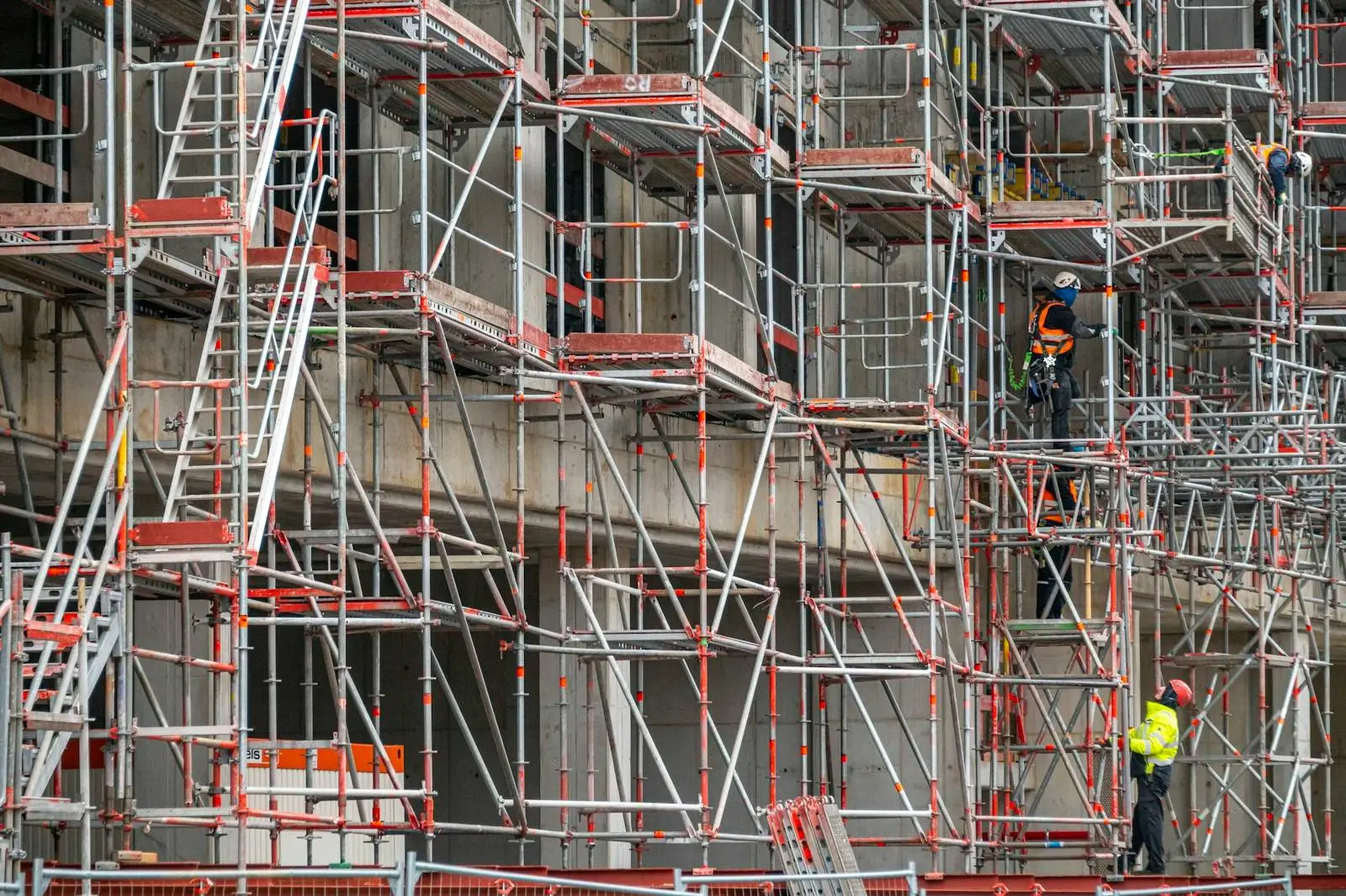
Anchors hold the scaffolding against the wall and transfer wind forces to the building. Without them, even a properly assembled facade scaffold is not stable.
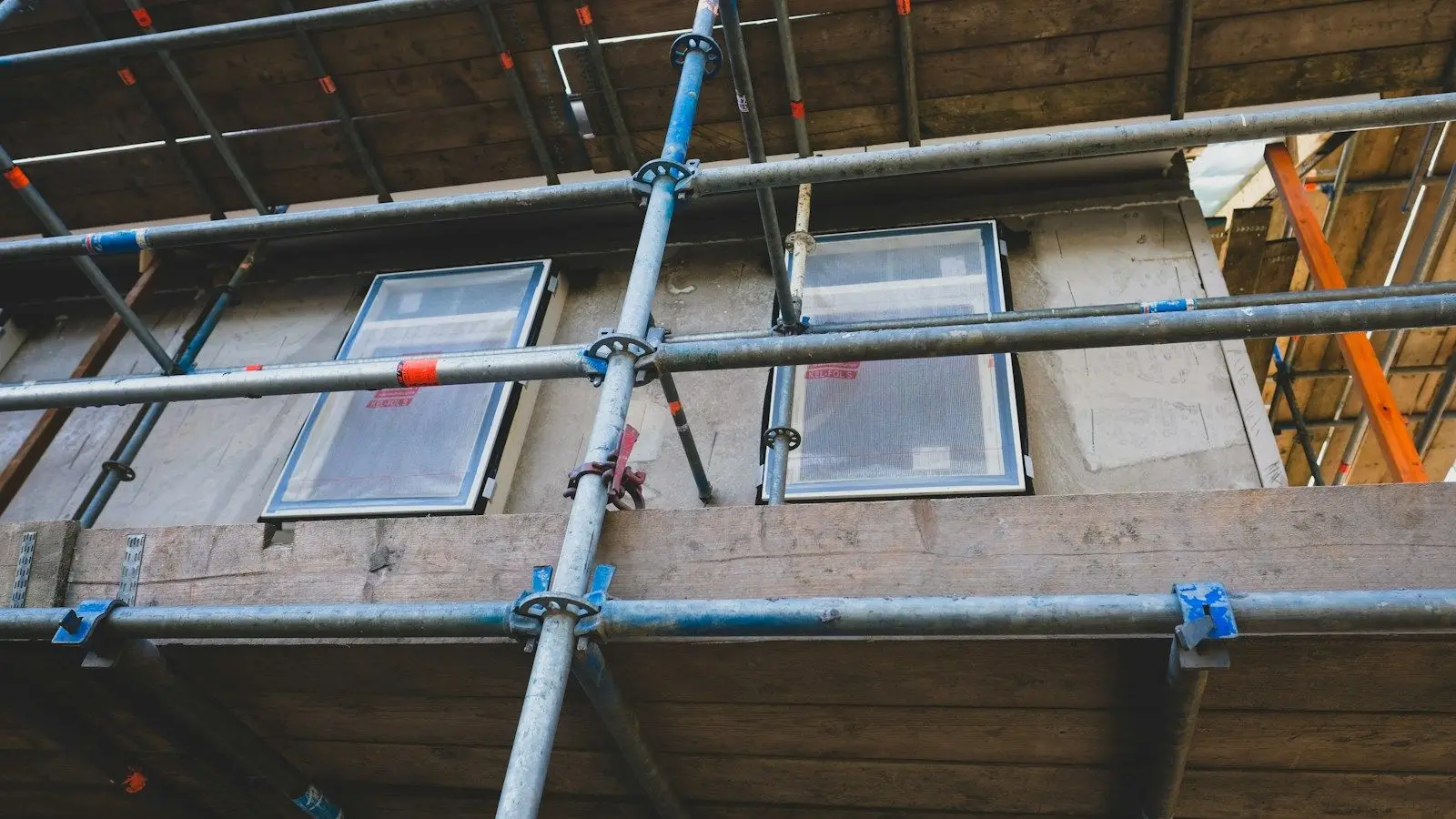
This guide describes the general rules for anchoring Plettac-type facade scaffolds. The number of anchors, their spacing and the required forces are always specified in the system's technical and operating documentation (DTR) and in the scaffolding design, if one is required.
Why anchor scaffolding?
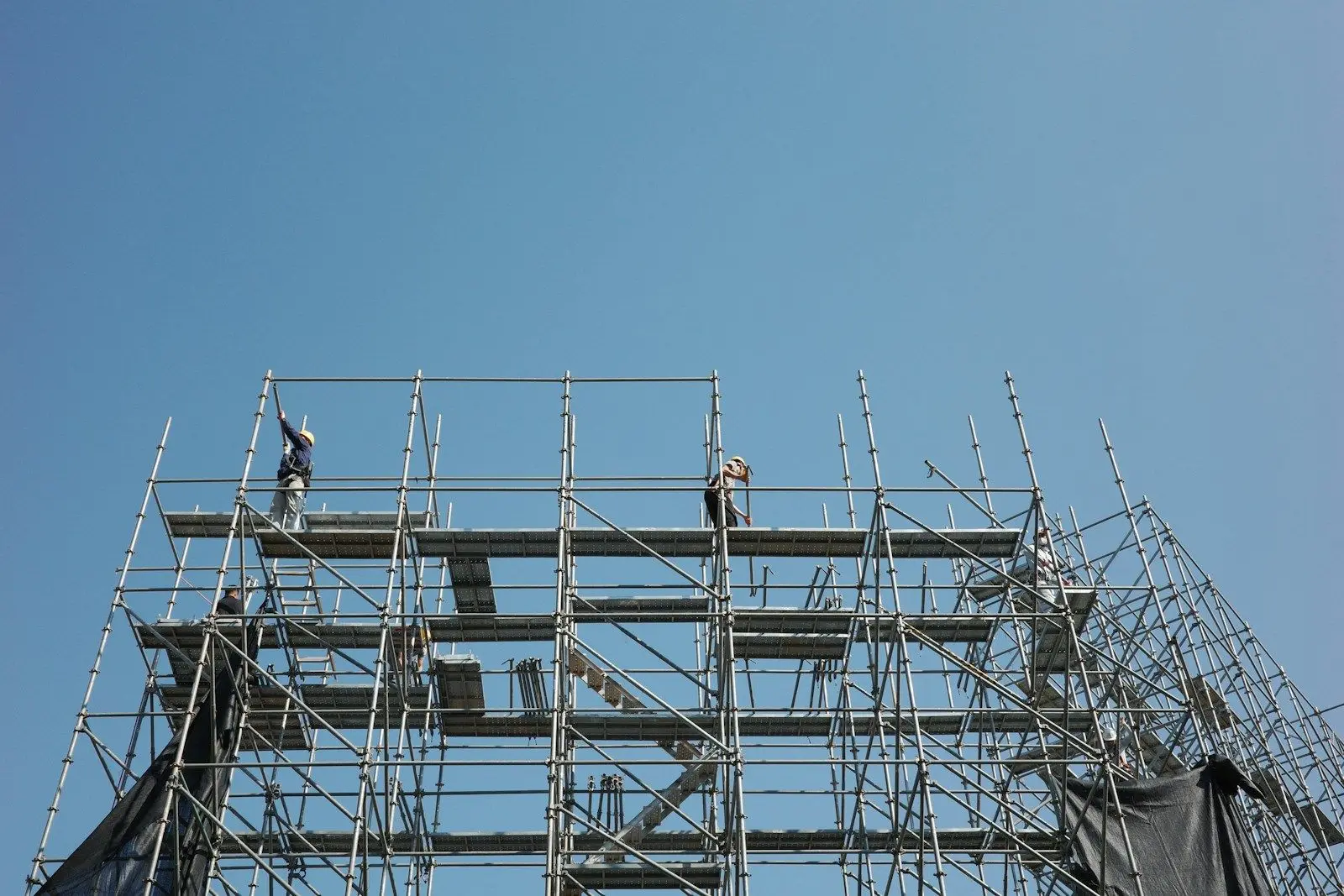
A facade scaffold is tall and narrow: it is 0.70 m wide, yet it can be over ten metres high. It cannot stay upright on its own. Anchors connect the frames to the building wall and transfer horizontal forces to it, primarily from wind. Thanks to them, the scaffolding does not lean away from the wall or topple towards it.
What does anchoring consist of?
- Anchor (wall tie) is a tube with a hook, which is fixed to the scaffolding frame with a coupler. Anchors come in different lengths, selected to suit the distance of the scaffolding from the wall.
- Eye bolt is screwed into a plug set in the wall. The anchor hook catches on the eye of the bolt. Eye bolts also come in several lengths, depending on the thickness of the insulation and the type of masonry.
- Plug is selected to suit the wall material. One type will work in concrete, and another in a hollow block or perforated brick.
Where are the anchors positioned?
Anchors are installed progressively, as successive levels are erected, not only at the end. They are positioned in a regular grid over the entire height and length of the scaffolding, usually at the frame nodes. The top level and the ends of the scaffolding require particular attention.
More anchors are needed when the scaffolding is covered with netting or a tarpaulin, because the covering increases the wind force. Brackets and hoist arms also require more anchors. The exact layout is always taken from the DTR.
Checking the anchors
The fixing of an anchor in the wall should be checked, especially when it is not known what the wall is made of. This is checked with a pull-out test. It is worth recording the results in the scaffolding documentation together with the acceptance report.
Most common mistakes
- Anchoring only after the entire scaffolding has been assembled.
- Too few anchors on scaffolding with netting or a tarpaulin.
- Wall plugs not matched to the wall material.
- Removing anchors during work, for example to make plastering more convenient. Anchors must not be removed for as long as the scaffolding is standing.
- Anchors fixed to gutters, balustrades or other elements that will not carry the load.
Anchoring components
Anchors and eye bolts are part of our complete sets. You can also order them separately when extending a scaffold or making up shortfalls. If you do not know how many you need, write to us.